Description
OVERVIEW
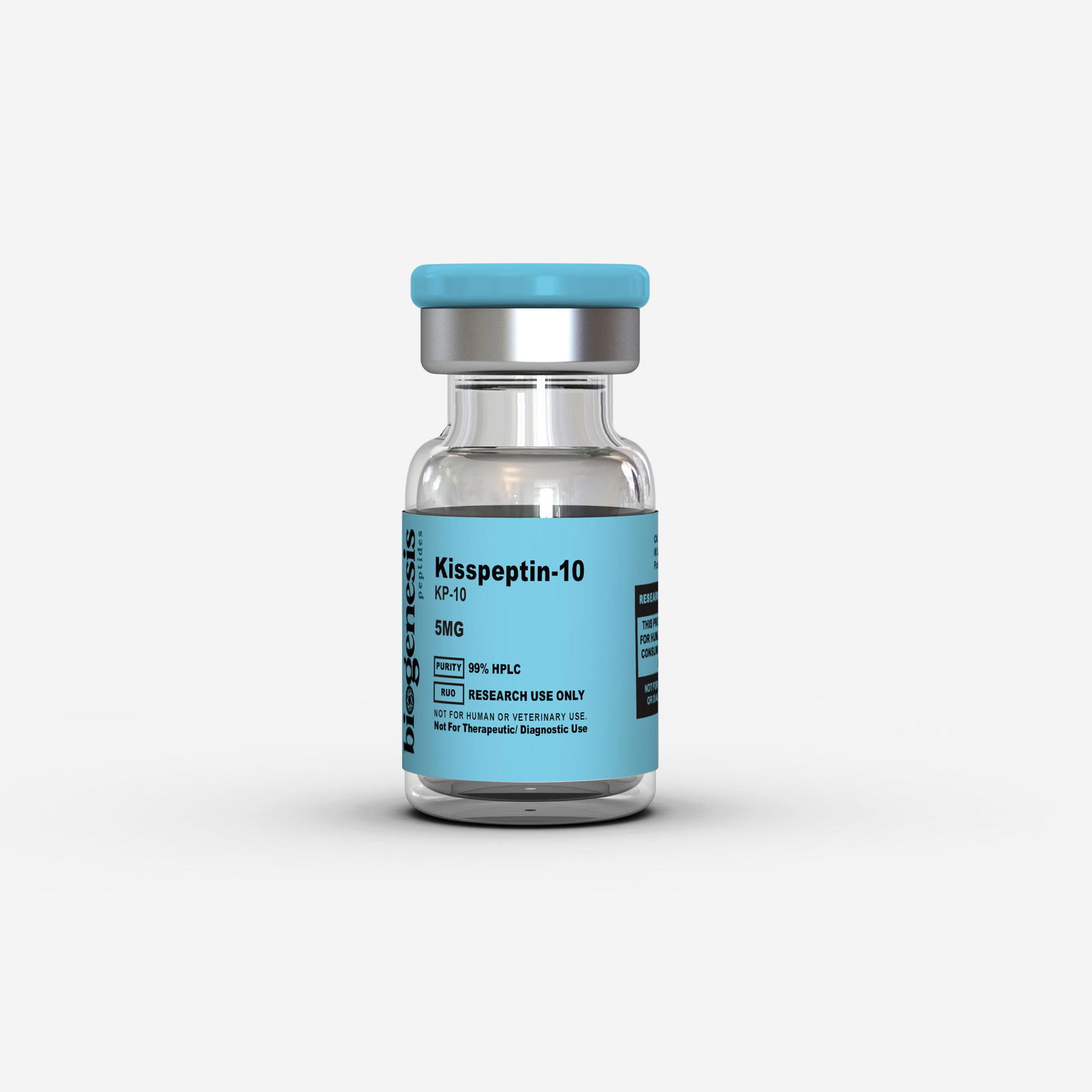
Kisspeptin-10 (KP-10) is a naturally occurring peptide that plays a critical role in reproductive hormone regulation. It serves as the primary trigger for the release of gonadotropin-releasing hormone (GnRH), which regulates key reproductive hormones such as testosterone, estrogen, and luteinizing hormone (LH).
Beyond its well-established role in reproductive function, emerging research suggests Kisspeptin-10 may also contribute to:
- Enhancing fertility and reproductive health
- Increasing testosterone levels in males
- Regulating mood, motivation, and behavior
- Modulating energy balance and metabolism
- Suppressing tumor growth and cancer metastasis
These potential benefits make KP-10 a promising candidate for therapeutic applications in reproductive medicine, endocrinology, neurology, and oncology.
RESEARCH
Reproductive Hormone Regulation
- Kisspeptin-10 initiates the release of GnRH, which stimulates LH and FSH secretion from the pituitary gland.
- This regulatory function makes it essential for puberty onset, fertility, and overall reproductive function.
- Potential application: Treatment of delayed puberty, hypogonadism, and infertility.
Testosterone Enhancement
- Clinical studies show that KP-10 significantly increases testosterone levels in men within 90 minutes of administration.
- This occurs by modulating LH pulse frequency, which fine-tunes the natural release of sex hormones.
- Potential application: Hormonal therapy and fertility enhancement in males.
Mood, Motivation, and Libido
- Research links Kisspeptin to brain regions involved in reward-seeking behavior, motivation, and emotional regulation.
- A clinical study on 29 men found that KP-10 administration enhanced limbic brain activity, suggesting benefits in treating low libido and mood disorders.
- Potential application: Treatment for hypoactive sexual desire disorder (HSDD) and mood-related conditions.
Energy Balance and Metabolism
- Kisspeptin neurons are highly sensitive to nutritional status, influencing GnRH release based on energy availability.
- Studies in genetically modified mice lacking Kiss1 receptors showed weight gain and reduced energy expenditure, indicating a role in obesity regulation.
- Potential application: Obesity management and metabolic health support.
Anti-Cancer Research
- Kisspeptin-10 has been linked to tumor suppression by reducing metastatic spread in various cancers.
- A groundbreaking study found that KP-10 suppressed melanoma metastasis by 95%.
- Altered kisspeptin levels have also been observed in breast, prostate, bladder, ovarian, and thyroid cancers, suggesting a role in tumor migration suppression.
- Potential application: Development of kisspeptin-based cancer therapies.
Memory and Cognitive Function
- Research suggests Kisspeptin analogs may enhance memory retention and cognitive flexibility.
- Studies in mice indicate that KP-10 counteracts learning impairments associated with alcohol exposure.
- Potential application: Neurological research and cognitive function support.
Kidney and Cardiovascular Health
- Kisspeptin receptors have been identified in the kidneys, where they support glomerular development and function.
- KP-10 has been linked to blood vessel function and cardiac output regulation, making it a potential therapeutic target for cardiovascular diseases.
- Potential application: Cardiovascular health and kidney disease treatment.
STRUCTURE
- Amino Acid Sequence: YNWNSFGLRF
- Molecular Formula: C₆₃H₈₃N�₇O�₄
- Molecular Weight: 1302.4 g/mol
- CAS Registry Number: 388138-21-4
- Synonyms: KISS-1, Protein KISS-1, Metastin, KP-10 Peptide
CITATIONS
- W. S. Dhillo et al. Kisspeptin-54 stimulates the hypothalamic-pituitary-gonadal axis in human males. J. Clin. Endocrinol. Metab. (2005).
- J. T. George et al. Kisspeptin-10 is a potent stimulator of LH and increases pulse frequency in men. J. Clin. Endocrinol. Metab. (2011).
- C. J. L. Harter, G. S. Kavanagh, and J. T. Smith. The role of kisspeptin neurons in reproduction and metabolism. J. Endocrinol. (2018).
- E. J. Mead et al. Kisspeptins: a multifunctional peptide system with a role in reproduction, cancer, and the cardiovascular system. Br. J. Pharmacol. (2007).
- T. Ly, S. Harihar, and D. R. Welch. KISS1 in metastatic cancer research and treatment: potential and paradoxes. Cancer Metastasis Rev. (2020).
- P. Pazarci et al. The effects of daylight exposure on melatonin levels, Kiss1 expression, and melanoma formation in mice. Croat. Med. J. (2020).
- E. Gibula-Tarlowska and J. H. Kotlinska. Kissorphin improves spatial memory and cognitive flexibility impairment induced by ethanol treatment in the Barnes maze task in rats. Behav. Pharmacol. (2020).
- A. N. Comninos et al. Kisspeptin modulates sexual and emotional brain processing in humans. J. Clin. Invest. (2017).
- M. Bhattacharya and A. V. Babwah. Kisspeptin: Beyond the Brain. Endocrinology (2015).
- Antitumor efficacy of Kisspeptin in human malignant mesothelioma cells. PubMed Central (PMC).



Reviews
There are no reviews yet.