
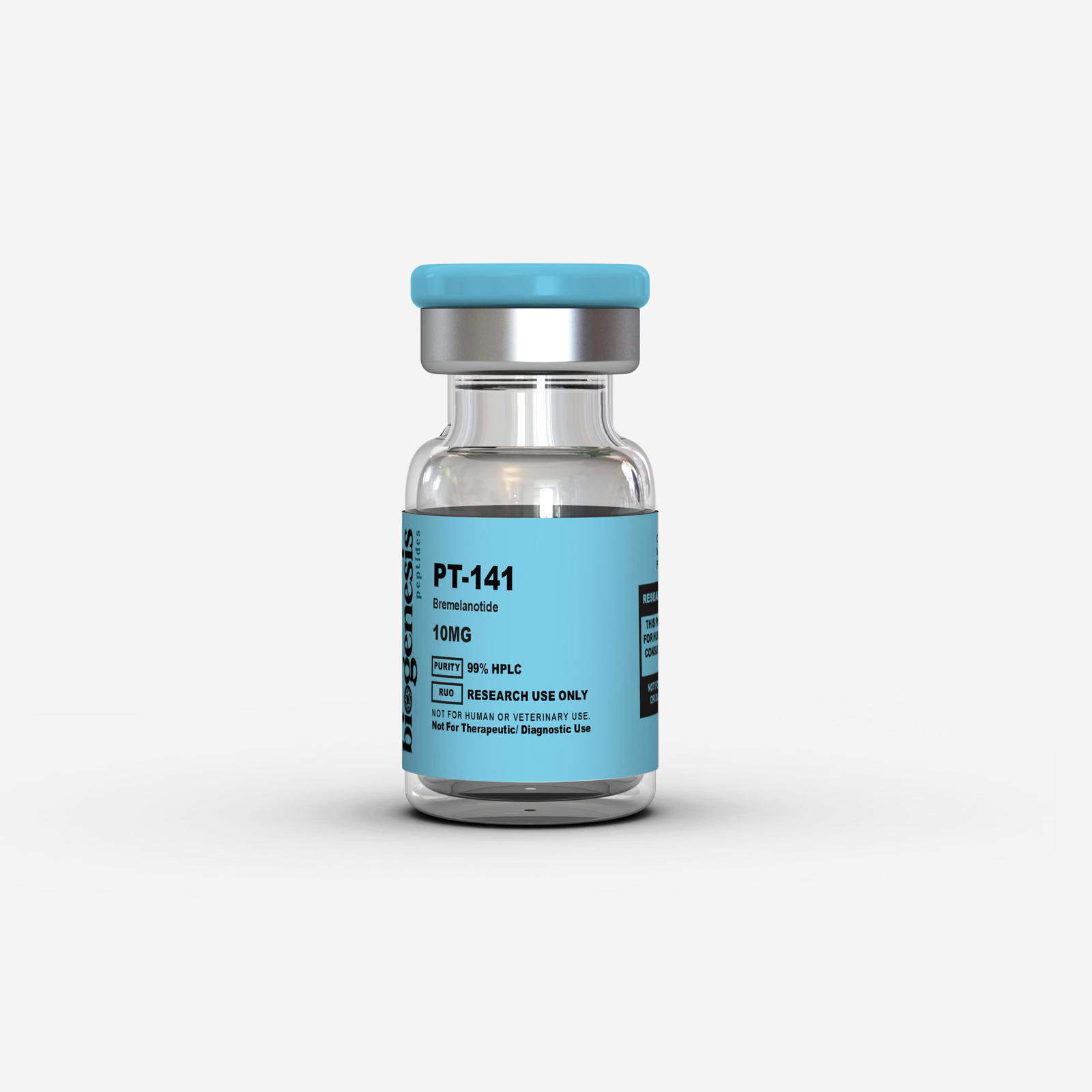
PT-141, also known as Bremelanotide, is a synthetic derivative of alpha-melanocyte-stimulating hormone (α-MSH). Initially developed to treat sexual dysfunction in both men and women, it has also been explored for its immune-modulating properties and potential applications in hemorrhagic shock treatment.
$55.00
Out of stock
on orders over $150
protection
256-bit SSL
We Accept


PT-141, also known as Bremelanotide, is a synthetic derivative of alpha-melanocyte-stimulating hormone (α-MSH). Initially developed to treat sexual dysfunction in both men and women, it has also been explored for its immune-modulating properties and potential applications in hemorrhagic shock treatment.
PT-141 functions as a melanocortin receptor (MC) agonist, primarily targeting MC-4R and MC-1R, which play roles in sexual arousal, immune function, and vascular regulation. Research suggests that PT-141 can:
Unlike traditional PDE5 inhibitors (e.g., Viagra, Cialis), which work by increasing blood flow, PT-141 acts directly on the central nervous system, making it a potential alternative for individuals with psychogenic sexual dysfunction.
PT-141’s impact on sexual function is linked to its activation of the MC-4R receptor, found in the central nervous system and associated with sexual behavior and arousal.
Because PT-141 acts via the brain and not the vascular system, it may be particularly effective for non-vascular causes of sexual dysfunction.
In 2009, PT-141 was investigated for acute hemorrhage treatment, with research suggesting potential emergency medicine applications.
These findings suggest PT-141 or its derivatives could be explored for trauma and critical care medicine.
PT-141 also targets the MC-1R receptor, which is involved in immune regulation.
This research highlights PT-141’s potential beyond sexual health, particularly in immune and inflammatory disorders.
Recent studies suggest that PT-141 may influence DNA repair mechanisms:
Ongoing research aims to determine whether PT-141 could help prevent certain cancers or support DNA repair in high-risk individuals.
Not for human consumption. This product is sold exclusively for research and educational purposes. It is not intended to diagnose, treat, cure, or prevent any disease.
All clinical trial data and research findings presented on this page are sourced from peer-reviewed journals and official publications. Thev are provided for educational reference only and should not be interpreted as medical advice or product claims.
Bv purchasing this product, you confirm that you are a qualified researcher and Will use it in accordance with all applicable laws and regulations.
Reviews
There are no reviews yet.