
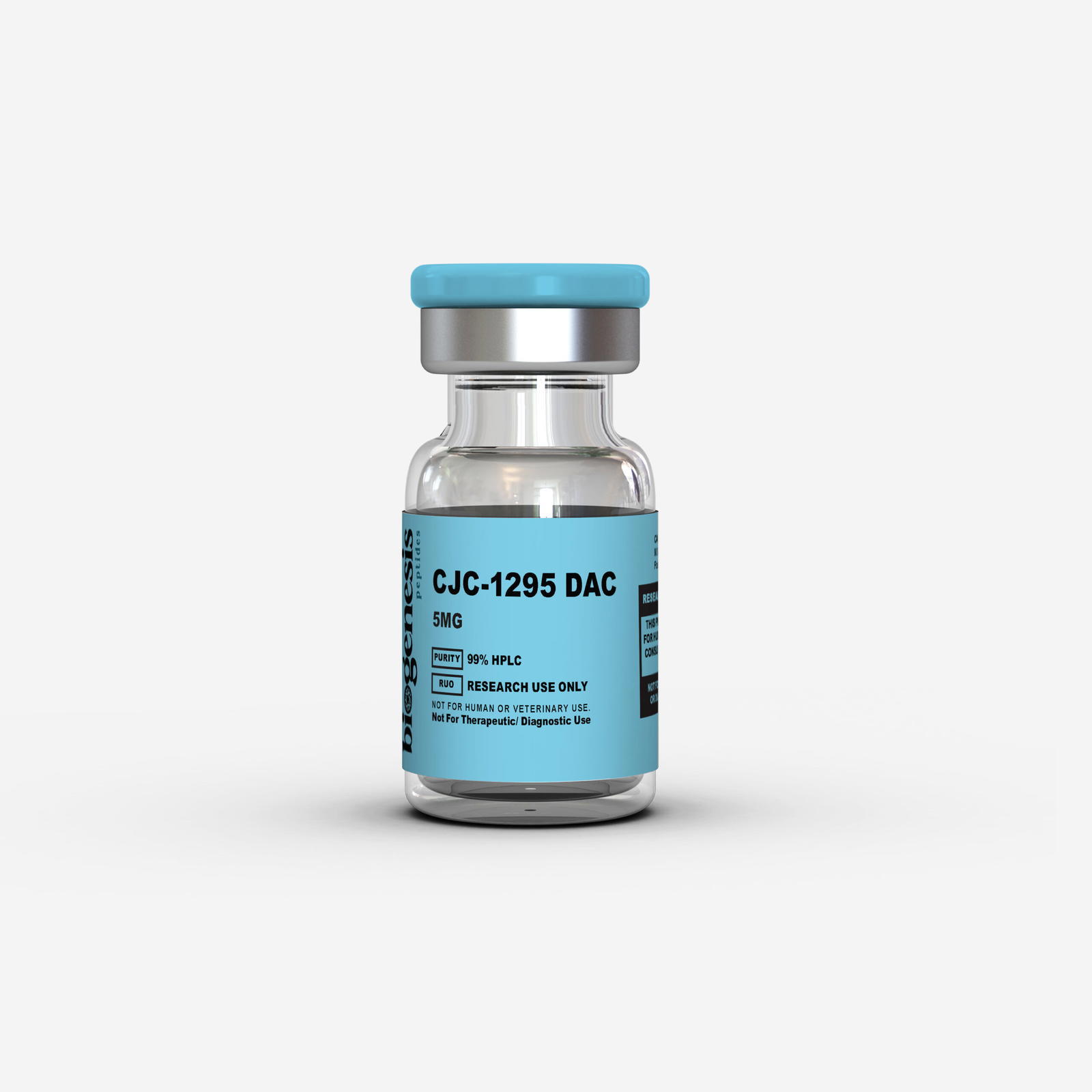
CJC-1295 is a synthetic analogue of growth hormone-releasing hormone (GHRH) designed to increase plasma levels of growth hormone (GH) and insulin-like growth factor-1 (IGF-1). It is derived from the first 29 amino acids of GHRH, similar to Sermorelin and Modified GRF (1-29), but modified for enhanced stability and efficacy.
$55.00
Out of stock
on orders over $150
protection
256-bit SSL
We Accept


CJC-1295 is a synthetic analogue of growth hormone-releasing hormone (GHRH) designed to increase plasma levels of growth hormone (GH) and insulin-like growth factor-1 (IGF-1). It is derived from the first 29 amino acids of GHRH, similar to Sermorelin and Modified GRF (1-29), but modified for enhanced stability and efficacy.
The DAC (Drug Affinity Complex) version of CJC-1295 includes an additional lysine linker, allowing it to bind to albumin, significantly extending its half-life. This prolonged activity leads to sustained GH release, reducing the need for frequent dosing compared to non-DAC versions.
CJC-1295 binds to GHRH receptors, triggering GH secretion while maintaining the body’s natural pulsatile rhythm. Research findings indicate that:
| Feature | CJC-1295 (No DAC) | CJC-1295 DAC |
| Half-Life | ~30 minutes | ~8 days |
| Dosing Frequency | Multiple injections daily | Weekly |
| Mechanism | Short-acting GHRH analogue | Binds to albumin for sustained GH release |
The DAC modification allows CJC-1295 to stay in circulation longer, preventing rapid degradation, and promoting longer-lasting GH stimulation.
Animal studies suggest that CJC-1295 enhances lean body mass through:
CJC-1295 has been linked to fat reduction and improved metabolic function by:
Clinical studies indicate significant fat loss in subjects using CJC-1295 over 12-24 weeks.
Research suggests that CJC-1295 may play a role in enhancing sleep cycles, particularly:
These sleep-related benefits contribute to overall well-being, cognitive function, and physical recovery.
Due to its ability to boost GH and IGF-1 levels, CJC-1295 has been explored for its potential in longevity and regenerative medicine. Benefits may include:
Not for human consumption. This product is sold exclusively for research and educational purposes. It is not intended to diagnose, treat, cure, or prevent any disease.
All clinical trial data and research findings presented on this page are sourced from peer-reviewed journals and official publications. Thev are provided for educational reference only and should not be interpreted as medical advice or product claims.
Bv purchasing this product, you confirm that you are a qualified researcher and Will use it in accordance with all applicable laws and regulations.
Reviews
There are no reviews yet.