Description
OVERVIEW
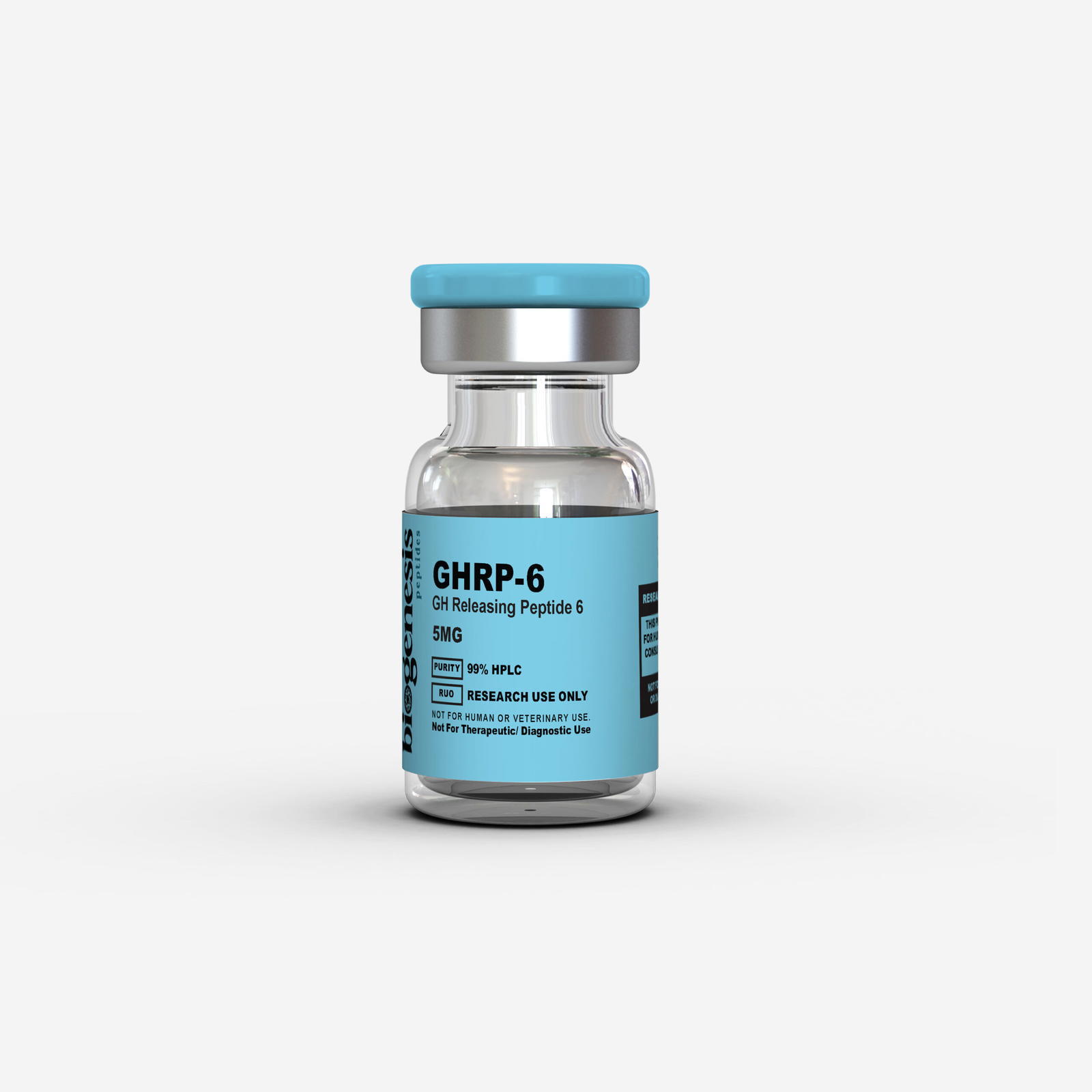
GHRP-6 (Growth Hormone-Releasing Peptide-6) is a synthetic peptide that stimulates growth hormone (GH) release by acting as a ghrelin receptor agonist. It has been extensively studied for its potential benefits in appetite regulation, tissue repair, cognitive function, and cardiovascular health.
Research suggests GHRP-6 may:
- Enhance memory and cognitive function, supporting long-term memory formation.
- Promote neuroprotection, reducing inflammation and cell death in brain tissue.
- Accelerate skin and wound healing, increasing collagen production and reducing scar formation.
- Protect heart tissue, minimizing oxidative stress and damage following myocardial infarction.
- Regulate mood and sexual motivation, possibly reducing symptoms of depression and stress.
- Support metabolic balance, potentially influencing obesity and energy homeostasis.
Due to these properties, GHRP-6 has potential therapeutic applications in neurological disorders, cardiovascular health, and tissue regeneration.
RESEARCH
GHRP-6 and Cognitive Function
- Studies suggest GHRP-6 enhances memory formation and spatial learning, indicating potential cognitive benefits.
- May aid in converting short-term memories into long-term storage, improving overall cognitive performance.
- Potential application: Treatment for age-related cognitive decline and neurodegenerative disorders.
GHRP-6 and Neuroprotection
- Research indicates that GHRP-6 reduces inflammation and prevents apoptosis (programmed cell death) in brain tissue.
- May play a role in stroke recovery and neurodegenerative diseases such as Parkinson’s disease.
- Potential application: Neuroprotection and post-stroke rehabilitation.
GHRP-6 and Skin Healing
- GHRP-6 has been found to promote tissue regeneration and enhance wound closure.
- Increases collagen production, reducing the risk of hypertrophic scarring.
- Potential application: Treatment for burn injuries, post-surgical healing, and chronic wounds.
GHRP-6 and Cardiovascular Benefits
- Studies in animal models suggest GHRP-6 reduces heart damage following a myocardial infarction (heart attack).
- May protect heart cells from oxidative stress, improving cardiac function.
- Potential application: Cardioprotection and post-heart attack recovery.
GHRP-6 and Mood Regulation
- Research in rats suggests that GHRP-6 influences sexual motivation and mood by interacting with ghrelin receptors in the brain.
- May help regulate symptoms of depression and stress, offering mood-enhancing benefits.
- Potential application: Mental health support and stress management.
GHRP-6 and Metabolism
- GHRP-6 has been investigated for its role in regulating metabolism, particularly in growth hormone secretion and energy balance.
- Potential application: Treatment for metabolic disorders and obesity management.
STRUCTURE
- Molecular Formula: C₄₆H₅₆N�₂O₆
- Molecular Weight: 873.032 g/mol
- Amino Acid Sequence: His-D-Trp-Ala-Trp-D-Phe-Lys
- CAS Registry Number: 87616-84-0
- Mechanism of Action: GHRP-6 binds to the ghrelin receptor (GHS-R1a) in the hypothalamus and pituitary gland, stimulating growth hormone release, which enhances cell growth, tissue repair, and metabolic function.
CITATIONS
- Huang, C.-C., Chou, D., Yeh, C.-M., & Hsu, K.-S. Acute food deprivation enhances fear extinction but inhibits long-term depression in the lateral amygdala via ghrelin signaling. Neuropharmacology (2016).
- Beheshti, S., & Shahrokhi, S. Blocking the ghrelin receptor type 1a in the rat brain impairs memory encoding.Neuropeptides (2015).
- Tóth, K., László, K., & Lénárd, L. Role of intraamygdaloid acylated-ghrelin in spatial learning. Brain Res. Bull. (2010).
- Subirós, N. et al. (Additional references pending completion)



Reviews
There are no reviews yet.