Description
OVERVIEW
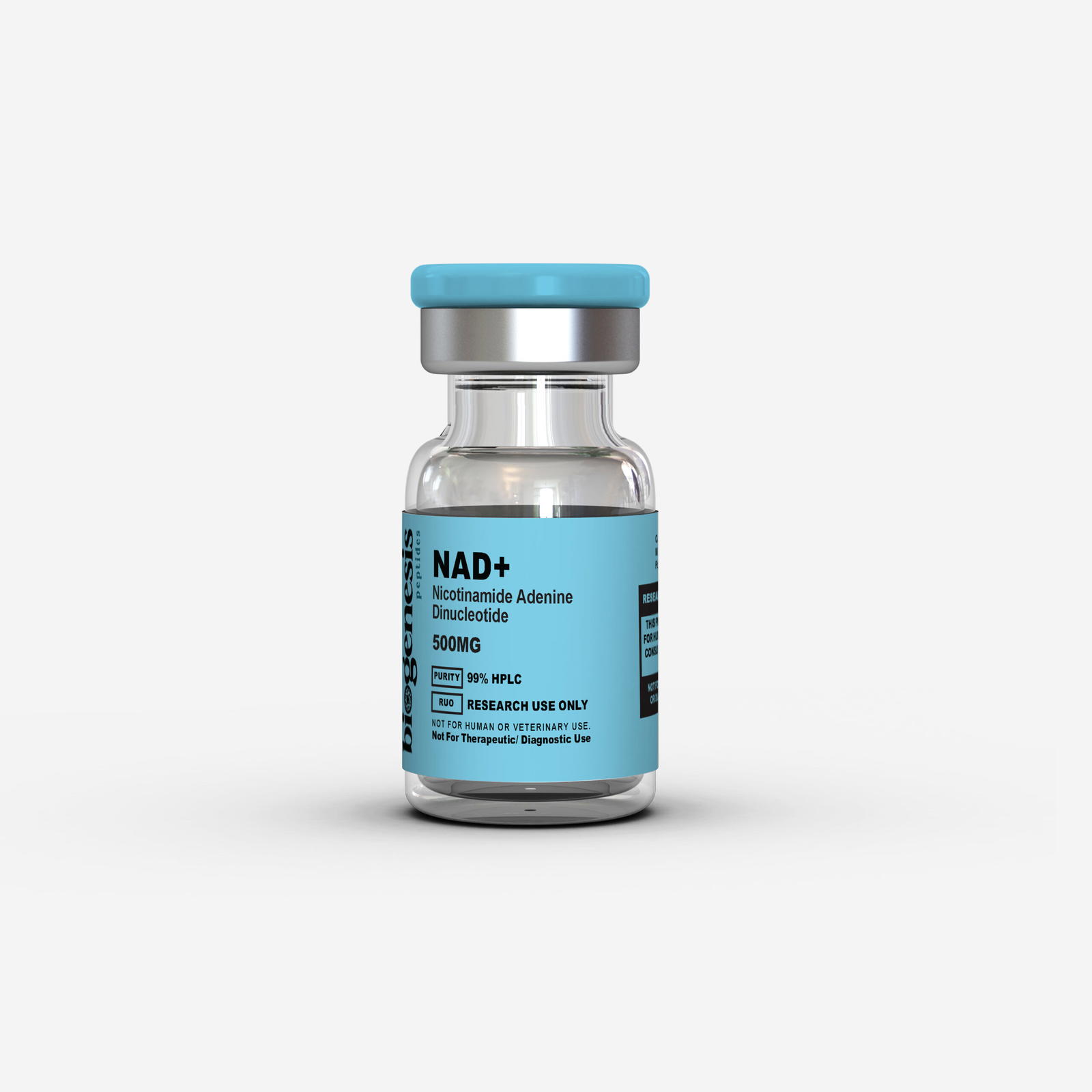
NAD+ (Nicotinamide Adenine Dinucleotide) is a vital coenzyme found in every living cell, essential for energy production, DNA repair, and cellular function. It fluctuates between oxidized (NAD⁺) and reduced (NADH) forms, supporting mitochondrial health and longevity.
Key Benefits of NAD+ Research:
✔️ Boosts mitochondrial energy production
✔️ Supports brain health and cognitive function
✔️ Promotes longevity and cellular repair
✔️ Enhances cardiovascular and metabolic health
✔️ Reduces inflammation and supports immune function
NAD+ is widely studied for its role in aging, neuroprotection, and metabolic disorders.
RESEARCH
1. Mitochondrial Health & Energy Production
- NAD+ is essential for ATP production in mitochondria via the electron transport chain.
- Declining NAD+ levels contribute to mitochondrial dysfunction, leading to fatigue, aging, and metabolic decline.
- Restoring NAD+ improves energy production and reduces oxidative stress.
- Potential application: Anti-aging, energy optimization, and mitochondrial health support.
2. Brain Health & Cognitive Function
- NAD+ activates sirtuins and PGC-1α, key regulators of brain cell repair and neuroprotection.
- It protects neurons from oxidative stress and inflammation, helping prevent Alzheimer’s, Parkinson’s, and cognitive decline.
- Research suggests NAD+ enhances memory, learning, and focus in aging populations.
- Potential application: Brain function, neuroprotection, and cognitive longevity.
3. Longevity & Anti-Aging
- NAD+ activates sirtuins (SIRT1 & SIRT3), enzymes linked to lifespan extension.
- It maintains genomic stability by repairing DNA damage, slowing the aging process.
- NAD+ precursors delay age-related decline in muscle strength and vascular health.
- Potential application: Longevity, anti-aging, and cellular rejuvenation.
4. Cardiovascular & Metabolic Health
- NAD+ supports blood vessel flexibility and prevents atherosclerosis.
- It enhances insulin sensitivity, reducing the risk of Type 2 diabetes.
- Higher NAD+ levels protect against obesity and metabolic syndrome in animal studies.
- Potential application: Heart health, diabetes prevention, and metabolic balance.
5. Inflammation & Immune Support
- NAD+ regulates inflammatory pathways, reducing chronic inflammation linked to metabolic disorders and autoimmune diseases.
- It enhances immune function, helping fight infections and age-related immune decline.
- Potential application: Immune support and inflammation reduction.
6. Addiction Recovery & Mood Regulation
- NAD+ levels are depleted in cases of chronic drug and alcohol use.
- Supplementation has been shown to reduce withdrawal symptoms and cravings.
- Studies suggest NAD+ supports mood stability and resilience against stress.
- Potential application: Addiction recovery and mental wellness.
STRUCTURE
- Molecular Formula: C₂₁H₂₇N₇O₁₄P₂
- Molecular Weight: 663.43 g/mol
- CAS Number: 53-84-9
- Synonyms: Nicotinamide Adenine Dinucleotide, β-NAD, Endopride
CITATIONS
- A. P. Gomes et al. Declining NAD+ disrupts nuclear-mitochondrial communication during aging. Cell (2013).
- S. Imai & L. Guarente. NAD+ and sirtuins in aging and disease. Trends Cell Biol. (2014).
- N. Sun, R. J. Youle & T. Finkel. The mitochondrial basis of aging. Mol. Cell (2016).
- R. T. Matthews et al. Coenzyme Q10 and NAD+ effects on brain mitochondrial function. PNAS (1998).
- C. Shan et al. Protective effects of NAD+ in Parkinson’s disease models. Prog. Neuropsychopharmacol. Biol. Psychiatry (2019).
- D. C. Maddison & F. Giorgini. The kynurenine pathway and neurodegeneration. Semin. Cell Dev. Biol. (2015).
- A. Garten et al. Roles of NAMPT and NAD+ metabolism in health and disease. Nat. Rev. Endocrinol. (2015).
- S. Yamaguchi & J. Yoshino. Adipose tissue NAD+ in obesity and insulin resistance. BioEssays (2017).
- D. Stipp. Beyond Resveratrol: The Anti-Aging NAD+ Fad. Scientific American (2019).
- S. Imai. NAD World 2.0: Systemic Regulation of Aging and Longevity. npj Systems Biology and Applications(2016).



Reviews
There are no reviews yet.