Description
OVERVIEW
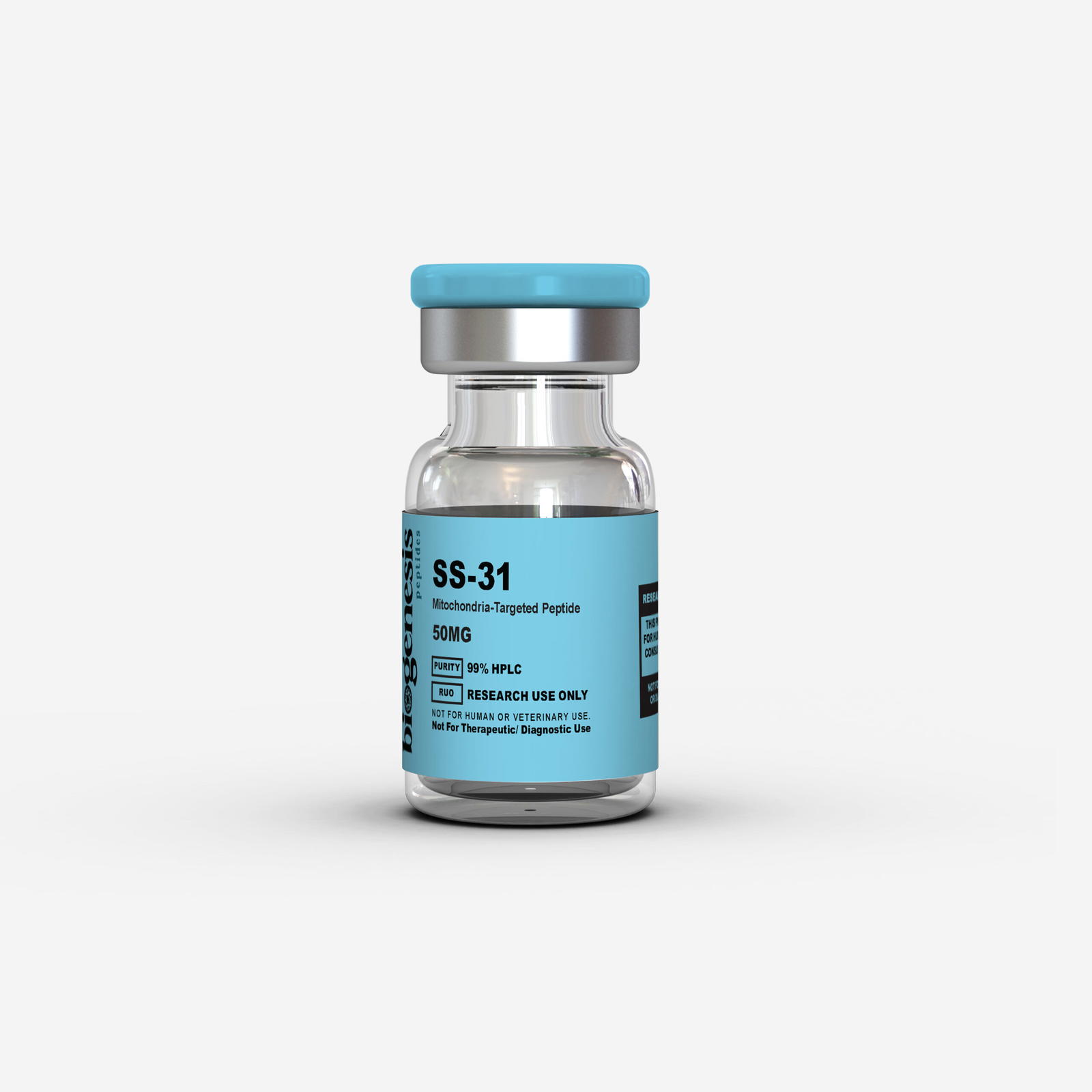
SS-31 (Elamipretide) is a mitochondria-targeted peptide designed to improve mitochondrial function and ATP production. By stabilizing cardiolipin, a key lipid in mitochondrial membranes, SS-31 helps maintain cellular energy production and metabolic efficiency.
Research suggests SS-31 may:
- Reduce oxidative stress by decreasing reactive oxygen species (ROS).
- Enhance mitochondrial function in high-energy-demanding organs such as the brain, heart, and kidneys.
- Support cellular metabolism and improve tissue recovery.
- Offer therapeutic potential in neurodegenerative diseases, cardiovascular disease, diabetes, and kidney dysfunction.
- Mitigate mitochondrial dysfunction, a root cause of many age-related and chronic diseases.
SS-31 was the first peptide to undergo clinical trials for mitochondrial disorders, earning orphan drug status from the FDA due to its promising role in treating mitochondrial diseases.
RESEARCH
SS-31 and Mitochondrial Disease
Mitochondrial dysfunction is implicated in neurodegenerative, cardiovascular, and metabolic diseases.
- SS-31 stabilizes cardiolipin, preventing the structural breakdown of the electron transport chain (ETC), which is critical for ATP production.
- Rat studies on ischemia-reperfusion injury showed restored ATP levels, reduced necrosis, and improved kidney function.
- Due to its promising therapeutic effects, the FDA granted SS-31 orphan drug status.
SS-31 and Exercise Performance
- Phase II clinical trials showed increased exercise tolerance within 5 days of SS-31 treatment.
- Enhanced mitochondrial respiration and ATP synthesis were observed in muscle cells.
- These findings suggest potential benefits for athletes, aging populations, and individuals with mitochondrial disorders.
SS-31 and Heart Disease
Heart failure is closely linked to mitochondrial dysfunction, which worsens the condition over time.
- Research in human heart tissue demonstrated that SS-31 improves mitochondrial function and oxygen consumption.
- Studies in dogs with heart failure showed enhanced left ventricular function and ATP production after SS-31 administration.
- Clinical trials in heart attack patients (STEMI trials) found that SS-31 reduced cardiomyocyte apoptosis, suggesting potential applications in post-heart attack recovery.
SS-31 and Diabetes
Mitochondrial dysfunction plays a key role in type 2 diabetes and its complications.
- Human studies found that SS-31 reduces oxidative stress and increases SIRT1 levels, a marker of improved insulin sensitivity.
- Diabetic patients experienced reduced inflammation and oxidative stress, supporting SS-31 as a potential treatment for diabetes-related complications.
SS-31 and Inflammation
- SS-31 suppresses inflammatory pathways by inhibiting NF-kappaB and reducing ROS production.
- Studies showed SS-31 decreases FIS1 expression, a protein linked to mitochondrial fragmentation in neurodegenerative diseases.
- In mouse models, SS-31 reduced oxidative stress markers such as CD-36, NADPH oxidase, and MnSOD activation.
SS-31 and Neurodegenerative Diseases
Alzheimer’s and Parkinson’s diseases are associated with mitochondrial dysfunction and oxidative stress.
- SS-31 is currently being investigated for its neuroprotective effects, particularly its ability to enhance mitochondrial stability in neurons.
- Potential therapeutic applications include delaying cognitive decline and reducing neuroinflammation.
STRUCTURE
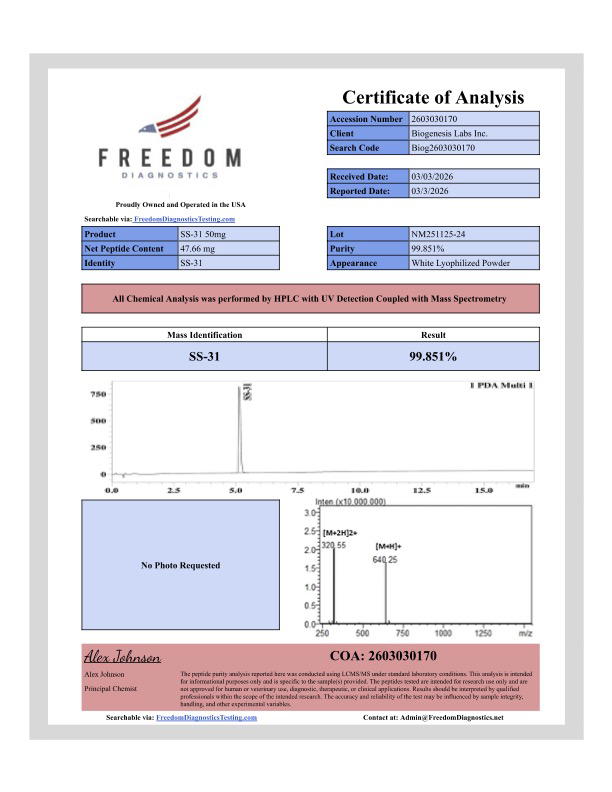
- Molecular Formula: C₃₂H₄₉N₉O₅
- Molecular Weight: 639.8 g/mol
- Amino Acid Sequence: D-Arg-Tyr(2,6-diMe)-Lys-Phe
- CAS Registry Number: 736992-21-5
- PubChem Identifier: 11764719
- Synonyms: Elamipretide, MTP-131, Bendavia
CITATIONS
- Szeto, H. H. et al. Mitochondria-targeted peptide accelerates ATP recovery and reduces ischemic kidney injury.J. Am. Soc. Nephrol. (2011).
- Siegel, M. P. et al. Mitochondrial-targeted peptide rapidly improves mitochondrial energetics and skeletal muscle performance in aged mice. Aging Cell (2013).
- Birk, A. V. et al. The mitochondrial-targeted compound SS-31 re-energizes ischemic mitochondria by interacting with cardiolipin. J. Am. Soc. Nephrol. (2013).
- Chatfield, K. C. et al. Elamipretide improves mitochondrial function in the failing human heart. JACC Basic Transl. Sci. (2019).
- Karaa, A. et al. Randomized dose-escalation trial of elamipretide in adults with primary mitochondrial myopathy. Neurology (2018).
- Mitochondrial Disease News Elamipretide failed to meet the promise of earlier trial results for primary mitochondrial myopathy. (2020).
- Neurology Live Could Elamipretide become the first treatment option for primary mitochondrial myopathy?(2020).
- Sabbah, H. N. et al. Chronic therapy with Elamipretide (MTP-131) improves left ventricular and mitochondrial function in dogs with advanced heart failure. Circ. Heart Fail. (2016).
- Hortmann, M. et al. The mitochondria-targeting peptide elamipretide diminishes circulating HtrA2 in ST-segment elevation myocardial infarction. Eur. Heart J. Acute Cardiovasc. Care (2019).
- Escribano-Lopez, I. et al. The mitochondrial antioxidant SS-31 increases SIRT1 levels and ameliorates inflammation, oxidative stress, and leukocyte-endothelium interactions in type 2 diabetes. Sci. Rep. (2018).
- Mo, Y. et al. SS-31 reduces inflammation and oxidative stress through the inhibition of Fis1 expression in lipopolysaccharide-stimulated microglia. Biochem. Biophys. Res. Commun. (2019).
- Hou, Y. et al. The antioxidant peptide SS-31 prevents oxidative stress, downregulates CD36, and improves renal function in diabetic nephropathy. Nephrol. Dial. Transplant. (2018).
- Hou, Y. et al. Mitochondria-targeted peptide SS-31 attenuates renal injury via an antioxidant effect in diabetic nephropathy. Am. J. Physiol.-Ren. Physiol. (2015).



Reviews
There are no reviews yet.